Middlesex County Courthouse
Defending JacobThe Middlesex County Courthouse is both the headquarters of the District Attorney’s Office and the principal institutional setting for the investigation and trial surrounding Ben Rifkin’s death. Its severe architecture, airless interior, and asbestos-lined elevator shafts make the building more than a backdrop: the courthouse’s isolation and decay echo the pressures and limitations of the legal process conducted within it.
Architecture and Conditions
The courthouse is a sixteen-story tower built in the 1960s, its exterior composed of molded concrete in rigid rectangular forms. Inside, grimy, yellowed spaces and windowless offices and courtrooms cut occupants off from daylight and the ordinary world. The account notes that windowless courtrooms are often designed to make law seem like work set apart from everyday life; here, the building’s oppressive quality makes that separation literal.
The courthouse is also known as a sick building. Its elevator shafts are lined with asbestos, and the elevators release toxic particles when their doors open. The structure is expected eventually to close, but for the lawyers and detectives working there, its shabbiness becomes familiar. The contrast is pointed: a building associated with the solemn authority of law is shabby, unhealthy, and easy to stop noticing.
Offices and Institutional Conflict
The District Attorney’s Office occupies this environment, including District Attorney Lynn Canavan’s corner office. In a meeting there, Canavan raises concern that Andrew Barber is handling the case despite his son Jacob attending the victim’s school. Neal Logiudice is also present, and Andrew suspects that Logiudice has helped bring about the challenge to his role. The corner office’s wood paneling and view over East Cambridge offer little relief from the courthouse’s stale air and institutional chill.
The building also stages Andrew’s abrupt removal from the investigation. On a Sunday morning, four plainclothes troopers from the CPAC unit meet him at the entrance and escort him through the lobby and deserted corridors to Canavan’s office. Larry Siff, Canavan’s press aide, is there with her and Logiudice. Andrew resents the political presence in a process to which he has devoted his career; the scene makes the courthouse a place where legal decisions and political considerations occupy the same room.
Courtroom and the Making of a Case
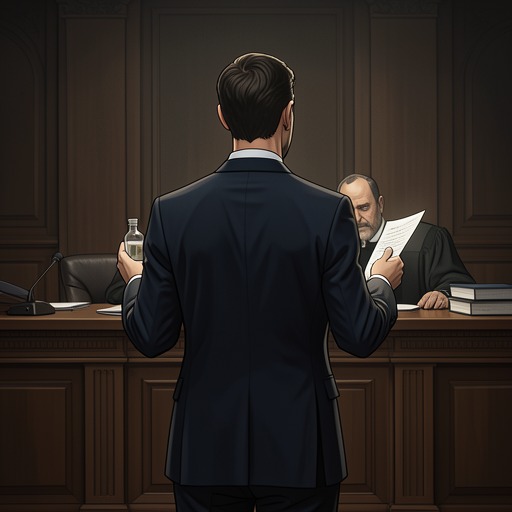
The courthouse’s windowless courtrooms host the trial as a performance designed to shape jurors’ understanding. In his opening statement, Logiudice describes Ben Rifkin’s death in Cold Spring Park and urges the jury to understand the case through the theme that Jacob “snapped.” He turns the claim into a repeatable phrase, snapping his fingers as he speaks. The prosecution’s account links the killing to Jacob’s alleged temper and to teasing at school, while conceding that the precise trigger may never be known.
The courtroom narrative is not simply a recitation of facts. The narrator observes that a lawyer must give jurors a story that answers what the case is about and supplies a phrase they can carry into deliberations. Logiudice’s account presents a coherent explanation even where motive remains uncertain; that gap between persuasive narrative and demonstrated cause is central to the trial’s tension.
The Courthouse as a Legal Environment
The courthouse’s authority depends on procedure, yet the proceedings described there expose how procedure is shaped by competing institutional concerns. In testimony about the investigation, a witness explains that interviews with students at the victim’s school were delayed amid parental concerns, questions about whether students needed lawyers, whether investigators could enter the school without a warrant, and which students could be interviewed. Those disputes show how the path from investigation to courtroom evidence is affected by access, permission, and the boundaries of official authority.
The courthouse therefore gathers the case’s conflicting forms of uncertainty: the investigation’s difficulty in establishing motive, the prosecution’s need to make facts intelligible as a story, and the institutional judgments that determine who may investigate and what evidence can reach the jury. Its enclosed rooms give these struggles a setting in which legal ritual appears both consequential and vulnerable to the pressures surrounding it.